The first night that we were settled into our new home, I decided to take a
walk “downtown” and check out the village's business district. Newport
in the sixties was kind of like a Norman Rockwell painting. There was the “main
corner” with a gas station, the town pharmacy, a furniture store, and the
combination bowling alley, diner, and bar occupying the four corners. Main
Street was lined with stately Elms, a large
Catholic church and the white clapboards and tall steeples of the Methodist and
Baptist churches. At the foot of our street was an Octagon shaped, limestone
house, with a small workshop attached to the back of it. That house was where
Linus Yale had invented the Yale lock, which is still in use today.
The village was bisected by the West Canada Creek. I decided to walk down
bridge street, appropriately named because it led to the BRIDGE, and take a
look at the creek and the dam. It was a keystone bridge, made entirely of
locally quarried limestone, and when you stood on the bridge, you could feel
the mist rising from the water as it spilled over the dam from the mill pond.
Above the bridge stood the village's only surviving industry, a Borden's
Instant Coffee plant. As I stood there, bored and forlorn, little did I know
that the spillway below that dam was the home to some of the biggest trout I
had ever seen. Little did I realize that trout fishing at the foot of that
spillway would become one of the greatest activities that I would ever enjoy.
Bridge Street had once been home to a shoe factory, that occupied a large
wooden frame building, and what had been the original feed store, that occupied
a two story limestone building. As I walked by the old feed store building, my
eyes met with those of an elderly man with a pork pie hat, sitting on a stool
in front of an antique cash register. He knodded a barely detectable greeting,
while chomping on the butt of a cigar. His face was friendly, and you could
tell by the way his face was drawn and his brow was wrinkled that life had not
always been kind to him. Looking past the old man, I could see two regulation
sized pool tables and a few boys standing around leaning on cue sticks or
leaning over the tables lining up their next shot.
I opened the door and with hesitation, I walked inside. I asked the old timer
how much it cost to play. He told me that it was 1 cent a minute for the table,
and that I should put my name on the chalk board waiting list. Whoever lost the
game had to pay for the table rental and everyone took turns challenging the
winner of the previous game. He said “where are you from youngster? You ain't
from around here are ya?” I told him “ I am now!” I told him my name and he
told me that his was Moses Everett, but everyone called him Mose. Mose had once
owned a larger pool hall in another town, but had done some time in prison for
some unknown charge, and had retired to Newport
after he got out. He and his wife and daughter were quiet and stayed to
themselves.
I put my name on the chalkboard, bought a 15 cent 7 ounce coke, and leaned up
against a counter to watch and wait for my turn to play. There was a handsome
kid about my age leaning on a cue, smoking a cigarette standing next to me. He
had jet black naturally wavy hair, a mischievous grin, and he was quite
friendly and outgoing. He introduced himself, and stuck out his hand to shake.
It was a strong arm, more like that of a man than a teenager. His forearm stuck
out of a flannel shirt, rolled up to his elbow, and his handshake about crushed
my fingers. His name was Gary Hartman, and he was to become my first, and one of
my best friends in my new hometown.
West Canada
Valley Central School
didn't travel all over the villages picking up the kids. We all had to walk to
the center of town and the main corner to catch the bus. The first morning I
was to attend school, I arrived on the corner to see Gary
standing in front of the furniture store smoking a Marlboro with a couple of
other boys. He immediately motioned for me to come over, and he introduced me
to several other boys, and when we arrived at school, he took me to the office
and introduced me to the principal and the secretary. That would not be the
last time that Gary and I stood together in the principal's office. We were not
the school's most stellar of scholars, and we did manage to get caught smoking
on school grounds, skipping school, or leaving school during the lunch hour
with in a friend's car which was forbidden.
Gary was a year behind me in
school, and I made many friends in my own class, but Gary and I would always be
friends and outside of school we always found time to bum around and to shoot
pool, or to cruise the roads of the area in our friend Mickey's 55 chevy.
I found that rural life was not as bad as I had anticipated. I had worked on
farms in Schuyler and Deerfield and loved animals and
the farm lifestyle. I took agriculture in school, and was the only “city kid”
to have ever won the tractor driving contest, competing with boys born and
raised on farms. I loved to sing, and soon was asked to join the chorus, and
with my DA haircut and sideburns, I was asked to play Conrad Birdie in “Bye Bye
Birdie”.
It was my ticket to popularity and acceptance. It was during those auditions
and rehearsals that I met the principal's daughter, Sue. We went steady for the
duration of our junior and senior years of high school. Sadly, Sue passed away
a couple of years ago after a 6 year battle with breast cancer.
Although I had begun to run with a different crowd, I always remained close
friends with Gary Hartman, and we still frequently played pool or ran around in
Mickey's car together. We still spent several hours a week together, rode
together on the school bus, and hung at the bowling alley and diner on the
corner in downtown Newport.
Life was great in Newport NY.
It was wonderful place to live and to grow up. Gary
had lived there all his life, as had most of my other friends there. Many of my
friends and classmates were farm kids, and lived a wonderful and wholesome life
on area dairy farms. Many of us town kids worked on those farms after school
and in summer. Others worked summers in the tannery in Middleville
NY or for area merchants. Gary and I once
worked with a friend digging graves for the local funeral director for $30 per
grave, which was big money in those days.
After graduation I went on to a two year college. Gary
graduated the following year and joined the Marines. It was not long before my
lack of “scholastic ambition” brought about the decision to quit college and
join the Navy. I had a childhood acquaintance that was on his second hitch in
the Navy and thought it was a great way of life, so I chose the Navy as opposed
to the Army.
Not long before leaving for basic training, I spent time with Gary
while he was home on a leave prior to his deployment to Vietnam.
We drank lots of beer, raised lots of hell, and had a great time.
He was a very proud young Marine and almost “eager” to put his training into
play and to battle Communism and to defend the freedom of South Vietnamese
citizens. There were those who were drafted, and were not happy to be serving
in the military, and then there were those of us who enlisted and were eager to
fight for the freedoms we enjoyed, just as our fathers and grandfathers had
fought for those freedoms in the wars of their own time.
Gary had extended his tour in return
for being able to come home on leave for Christmas in 1966. He would have been
out of the country of Vietnam
had he not extended, but it was shortly after his extension went into effect,
that he was killed on April 21, 1967.
He was killed by hostile fire while on patrol in Quang Nam,
Vietnam.
Gary and I had corresponded by mail occasionally and were looking forward to
the end of our enlistments, and to going home to Newport
to start our adult lives and futures. I didn't hear from him for quite a while,
and then one day the horrible news arrived in a letter from my mother. Gary
had been killed. I broke down and sobbed by heart out. I had known others that
had died in Vietnam,
and I knew a couple of those that were wounded and sent home disabled, but this
was my high school friend. My carefree buddy and pool partner. He had arrived
back in Newport at our small town
funeral home in an aluminum box, to be honored with full military honors, with
marines flanking his closed casket during calling hours, according to my
parents.
I was unable to get leave to come home for the funeral. Gary's
death had the most grievous impact on my young life of any death before or
since. It was so sudden, so unexpected, so violent and so unfair. It was
different than the death of relatives from natural causes and old age.
When the “war” was over, and we were all back home, I never got over the sad
realization that we had left proud and eager to fight the good fight in the
name of Democracy, and we had come home unappreciated, looked down on my many,
and with way too many memories of brave young men that made the ultimate
sacrifice.
I played pool in that old pool hall on Bridge Street,
and I drank in all the bars up and down the West
Canada Valley
and other places. It wasn't the same as when we hung out and drank 35 cent
drafts without a care in the world. It simply was unfair that Gary
was not there to tip a bottle or two of beer and play a game or two of nine
ball. It was a such a waste that so many young American lives had been
sacrificed in vain, in a country that ended up in the hands of the communists
anyway.
58,260 American men and women gave their lives in that hot and steamy jungle.
58,260 men and women made the supreme sacrifice in the name of corruption and
politics.
On March 26, 1982 the
ground was broken for the Vietnam Veteran's Memorial Wall in Washington
DC. In November of 1984 the wall became the
property of the people of the United States, to be maintained by the National
Parks Service (information and facts concerning the building of the wall have
been taken from the website
I have visited Washington DC many times over the years. I have even stood on
the knoll overlooking the wall and shed tears for my friend Gary as well as for
all the other former comrades and fallen veterans listed on the granite panels.
I have tried on two different occasions to visit the wall, and to touch Gary's
name on the wall. There is a haunting desire to simply touch his name and to
kneel before the wall, to pray, and reminisce about the fun loving kid from Newport
NY that died on that April day in 1967.
That young man that died in a jungle many thousand miles from those peaceful
hills surrounding the West Canada Creek.
I have twice gone forward with every intention of simply walking to panel 18A
to pray and fulfill that desire to touch his name. Both times I have walked
toward the wall, and as soon as I began to descend into the area in front of
the wall, overwhelming grief inexplicably came over me, and I have broken down
and sobbed. Both times I have turned around and left. I was able to get a
rubbing of his name off the wall when my younger brother visited the wall many
years ago. It rests in a photo album, along with a couple of pictures of Gary,
taken before we enlisted and left Newport.
I will always carry the memories that Gary and I created together. I will
always remember his smile and his curly black hair, and his strong personality.
He wasn't afraid of anything, and he paid the price for that lack of fear by
defending freedom as a proud US Marine, and by dying in a jungle far away in a
war that forever goes down in history as a failure and a waste of lives.
Every Memorial Day I still picture his mom, the only Gold Star mother of a
Vietnam Veteran, riding I an open car with the mother of a WWII veteran, during
he little Memorial Day parade in downtown Newport
NY. I always am brought to the verge of
tears thinking of the lives wasted, of my generation, while proudly fighting
the threat of Communism on foreign soil. The cold war is over now, but in those
days Communism was a serious threat and nuclear war was our biggest fear as
children growing up in the 50's and 60's.
Somehow I try to justify our fight as a stumbling block that stifled the
forward march of Communism. Somehow I always try to justify the loss of all
those young lives as a price paid in the name of freedom, although the
particular war in which they were lost was a sad failure and unmitigated
disaster militarily. One has a hard time wrapping their mind around the idea
that their best friend as well as thousands of other fellow veterans died in
vain, in a country far away. It is hard to think that those lives served no
purpose at all and were sacrificed in futility. Anyone that can simply call it
a “political war” or a “conflict” rather than a war, damn sure never served
there during that time. It WAS a war. It was no different than any of the other
wars that our military has fought over the years. It was a hot, steamy,
stinking, bug infested, fungus breeding, hell hole, and the tactics and booby
traps used against our fighting men were horrific. The tortures and the
humiliation as well as the abuses and neglect that our troops suffered in POW
camps are as real as they were in Japan
or Korea, or in
the hands of Nazi's in WWII.
Believe me when I say it WAS a war, and that war is memorialized by a black
granite wall in our nation's capital. The names of those killed or missing are
engraved on 144 panels divided into the east wall and west wall.
Gary Hartman's name is listed on line 59 of panel 18E. Someday before I die, I
WILL find my way to the wall again, and WILL touch his name on that wall.
In memoriam:
Gary Richard Hartman
Corporal E-4 US Marine Corps.
Length of service: 1 year
casualty date: April 21, 1967
Quang Nam, South
Vietnam as a result of hostile fire.
His name is located on PANEL 18E, LINE 59 on the Vietnam Veteran's Memorial
Wall.
Rest in peace my friend.
Saturday, April 30, 2016
Tuesday, April 26, 2016
CONTINUED: Gorgeous - A Tale From Utica

Grandma's secret entertainment in the
early 1950's ... and it wasn't much of a secret in a household with five other
people ... was to watch wrestling on WKTV on Saturday nights. She was getting
pretty old by then, just into her fifties, but youthful looking. She let nothing interfere with viewing the half
naked men bounce and strut around the
canvas ring, clutching each other in aggressive embraces and hammer holds, and
thwacking each other with body blocks. Enrique
Torres, Don Eagle, and Whipper Watson were the idols of the time, but none was
so glamorous as the redoubtable Gorgeous George Wagner.
Mr. Wagner didn’t appear in the
ring until near midnight so the ad
agency men could show an extra hour of pitches containing mindless lyrics put
to bad music. A favorite among my
brothers and I featured Bucky Beaver (without his sidekick, Bullwinkle the
Moose) singing, “Brusha, Brusha, Brusha, with the new Ipana. It’s dandy for your tee-ee-th.”
As the night wore on and we boys
began to nod off in front of the tiny screen, Grandma kept her vigil, waiting
for the other wrestlers to finish as she rocked her chair faster and faster
until Gorgeous George appeared in the ring. At his entrance, Grandma's enthusiastic clapping would bring us back up
to the level of consciousness in time to see a walking refrigerator of a man with
blond flowing hair enter the ring, his flouncy gown trailing behind him.
Grandma swooned and we kids fell back to sleep.
Wrestling was about as risqué as anything Grandma allowed herself, if
you didn’t count her special "cough
medicine" bottle she kept in her closet high on a shelf.
When Gorgeous
George’s promoters scheduled a match in our city in the winter of 1952, Grandma
reacted as a teenager would several years later when Elvis came to town.
“Oh, we can’t
miss it. We just have to go,” she would blurt out a few times
each day.
“I’m taking Eddie to the Avon
Friday night,” Grandma announced to my parents on a snowy afternoon in
1952. It was the first I’d heard I’d be going
with her.
“He’s not ready for that,” said my
father.
“Oh Fred,” said my mother, “let
him go. He’s the only one of the boys interested and Grandma needs someone to
go with her.”
That was true. My two brothers thought wrestling a farce,
although they would have gone along for the ride if asked. I was almost sure it was fake, but Grandma
and I got along well and she always bought me heaps of candy. In her experience, teeth didn’t last beyond
childhood anyway.
My father did not reply, so I had
no idea why he thought I wasn’t ready for adult wrestling, sitting among men as
they chewed on their cigars, spit out the juices, slipped a flask of whiskey
from an inside pocket and swore like troopers.
I figured if Grandma could take it, so could I.
When Friday came, it was snowing once again. Gram announced she was taking me out for dinner to the Villa Restaurant a block
down the street. She often took any one
of us three boys with her for a fried fish dinner on Friday night, but only one
boy at a time. As it happened it was my
turn to go. When we stepped off our
front porch steps, she steered me up the street instead of down.
"We're going the wrong way, Gram."
"We're going up to the bus stop and then to the Avon."
"Dad said we couldn't ..."
"Your father did NOT forbid you from going. He only advised."
Now THAT was something for my little brain to think
about, although the probable outcome of my rumination would no doubt indicate disobedience. But there was a more pressing issue.
"When do we eat?" I asked.
The bus made it’s way over to Eagle
Street and then along the route to downtown Utica. I assumed we would stop at another of
Grandma’s favorite places, the Ten Pin Tavern. The TeePee, as we called it, was an upscale
neighborhood bar that served fried fish dinners on Friday night, just like the
Villa on Leah Street. But the Teepee had table cloths and a
waitress who called me “sir” rather than “sweetie pie” and referred to Grandma
as “Ma’m” instead of “Granny.”
“We have plenty of time before the
wrestling show,” Grandma told me as the bus approached the restaurant.
Frankly, I wasn’t very
excited. I had been thinking of my
father’s negative reaction to wrestling and I felt a little guilty. True, wrestling didn’t
appear to be sordid entertainment, but if Dad didn’t care for it, it must not
be the best way to spend an evening.
Grandma’s opinion held some authority, but a father’s belief system weighed more than a grandmother’s.
Snow fell from the sky on this
late winter night. The alternating warm and cold days at this stage of winter
left behind partially melted street
surfaces with washboard stretches of bare pavement and bumpy patches of ice. Gaping
holes dotted the pavement, the work of previous freezings. A small kid could have hidden in one,
assuming he wanted to get killed. My
empty stomach began to churn each time the driver ran us over a bump in the
road. All the sliding windows on the
vehicle rattled like we were being strafed by enemy aircraft as we crashed our
way over railroad tracks and every single
manhole cover in our path along Eagle Street
to downtown. However, like any nine year old, my vigor improved miraculously as
I contemplated the next fun thing to do, but not too far beyond five or ten minutes
into the future.
The Ten Pin whizzed by outside the
bus window.
“Hey, Gram,” I said. “How come we didn’t get off for the TeePee?”
“It’s a special night,” she
replied. “We’re going to the Waldorf Cafeteria.”
This was terrific news! Adults claimed the Waldorf’s food to be
superior, but the attraction for me was cafeteria style serving by a happy and
heavy woman who really piled the food on a hungry boy’s plate.
A typically selfish kid, I gave no
thought to Gram having to pay more for us to dine at the Waldorf. I’m sure it took her beyond the weekly budget
she had set for herself. I remember my
grandmother as both generous and frugal.
She never had much money and she tried to hold on to any cash that came
her way. She’d known poverty as a child. As an eight year old girl, she found herself
underage and fired from her job when the Child Labor Laws were passed in the
1890’s. The new laws put her out of
work. Like many other younger children,
Grandma and two siblings no longer had earnings to bring home to help pay the
rent or to buy food and clothing. The
government seemingly had no consideration for how families would survive. Grandma’s parents and brothers and sisters lost
their apartment and were kicked out on the street. Their belongings were piled up on the curb by
their landlord. The family was forced to
split up and look for work and living quarters wherever they found them.
Grandma was Mom’s step
mother. She had married Grandpa and,
though a Presbyterian, agreed to bring up Mom Catholic. She seldom accompanied us to our church, but
each time she blessed us with her presence the morning was always
memorable. While we brought our missals
to Mass, Grandma brought her dream
book. Dad would sit amongst us in the
pew and do a slow burn while the old woman looked up her dreams. On the drive home she would ask if anyone checked on how Father McAdoo spent the
money collected each week. She hoped he wasn’t sending the money to Rome,
“over there with the Fascists.” She
wondered if McAdoo’s housekeeper was more than a housekeeper, whatever that
meant. Grandma considered Catholicism
dismal and joyless. “Who would name a
church after a casket?” she asked one Sunday morning, referring to Our Lady of
the Holy Sepulcher. (When the basketball
team scored, our cheerleaders yelled “Ho-lee Sepulcher, Ho-lee Sepulcher,” as
one might yell “HO-lee MO-lee”
or “ HO-HO-HO chi-minh. In fact, Holey
Moley was our nickname for the church.)
The bus windows calmed down as we
arrived in the downtown area of Utica, where the merchants paid a lot of taxes
and expected the roads to be re-paved on a regular basis. When we arrived at our stop in front of Grace
Episcopal Church, I stood to allow Gram
to walk down the aisle to the front of the bus to exit by the forward
door. She turned and gave me a look,
rolling her eyes in an advance token of disapproval. I hurried to the back door and poised myself
on the top step, hands gripping the
vertical shiny poles on either side in readiness for the jump.
As the bus stopped and the doors
opened, I threw my body back and then whipped forward, pulling on the poles to
fly straight out the back door into the snowy night. This was my version of an
Army Airborne parachute jump and I always did it from the back door where the
bus driver couldn’t reach out and stop me.
Falling on the snow covered sidewalk, I’d roll off to one side,
sometimes colliding with the legs of an innocent bystander. To this day, I’ve never lost the urge to jump
when exiting a bus. But I gave it up as
a teenager when I twisted my ankle and my date left me on the sidewalk, so
embarrassed was she to be with a boy who might one day join the circus and be
shot out of a cannon. The police picked
me up off the sidewalk and gave me a ride home, but only because my Uncle Billy
was a cop. Mom was mortified when the
cruiser came up our street and deposited me at the end of the driveway. She was sitting on the front porch as I staggered to the bottom of the
stairs. Sergeant Maccachiatti leaned out
the window of the patrol car and shouted to my mother … and all the neighbors
sitting out on a fine summer evening … “He’ll be OK. Found him lying on the
sidewalk downtown.”
But here on this snowy night with
Grandma, I did a perfect touchdown and roll,
scaring only a few passersby who were waiting for the bus. Picking myself up and looking around at the
lights of downtown, I was as un-self conscious as any nine year old could
be. The snow had let up and Genesee
Street looked like a fairy land of white. The streetlights illuminated the facades of
the first and second floors of the retail and commercial buildings, some a
dozen stories high. I stared up at the
Grace Church steeple, which rose up through the glow of the lights and then
disappeared into the blackness of a universe I could only imagine.
Grandma dragged me across Genesee
Street. I
was embarrassed to have my hand held by an old lady, even if I was related to
her. We were sure to “look both ways
and then a second time for good measure,” even though with the snow, not very
many cars were on the streets. On a
weekday afternoon in good weather, this wide intersection of Genesee,
Columbia and Seneca Streets would
be a hazardous crossing. Especially for kids, because we were so short and
drivers couldn’t see us until we went flying up over their windshields. According to my older brother. Well, he was right about the cookies. Right or wrong, since he was the oldest in
our crowd, all the neighborhood kids believed him … about everything. When we had grown to be adults, I once
asked him if he took any responsibility
for the incarceration rate of the group of kids we grew up with and with whom
he had shared his opinions and advice at age 12. He looked at me a moment and then said “Yes,
I do.” I didn’t believe him so I dropped
it. Later he told me he'd misunderstood and thought the word
“incarceration” had meant something to do with sex.
A short distance over Columbia
Street we turned and pushed through the door into
the Waldorf Cafeteria as a blast of heated air met us and steamed up my
glasses. I spent a moment standing in
the middle of the entranceway, my hands dog-paddling like I’d just been struck
blind and was waiting for someone from Nazareth
to come and restore my sight. Smells of
cabbage and turkey and meat loaf and spiced ham quickly coaxed me into pulling
my glasses down my nose to stare over them and follow Grandma to an empty booth
where we left our coats, gloves and my hat.
We headed to the food line while I bounced up and down trying to see
what was on the menu.
A large man was ahead of us in
line and his threadbare coat spoke to his meager circumstances. The seaman’s watch cap pulled down over his
ears caused me to wonder if he’d come into town on the canal, even though he
looked to be a hobo who had arrived on a train. He could have been a workingman, but most of
the city’s factory workers and tradesmen would have left the downtown area by then
and be whooping it up in the neighborhood taverns like the one down the street
from our house. I decided he must have
just jumped off the train from New York City
after a free ride in a boxcar. He was no
doubt here to get his grub before he jumped on a westbound freight headed
outbound, balling the jack through Syracuse
toward Niagara Falls and on to the Great
Lakes. I’d always wanted to
go to Niagara Falls, but was
uncertain I’d find any excitement at the Great Lakes.
The fat lady waited patiently
while Grandma and I argued over whether I could have both the meatloaf dinner
as well as a second spiced ham entrée.
We heard the skinny lady at the cash register tell the hobo in front of
us he couldn’t have the food on his tray.
“I forgot my wallet,” he
said. “I’m working nearby. I’ll bring the money back in a bit.”
Not likely, I thought. After the westbound left town, he’d never be
heard from again. And not surprisingly,
the woman shook her head no.
Grandma muttered something to
herself and pushed her arm beyond the man toward the cash register.
“Here,” she said, proffering a
five dollar bill, “I’ll pay for the three of us.”
This was not surprising. My grandmother was a soft touch to anyone on
the street needing a handout. Some
people who were brought up poor are surprisingly not generous, but Grandma
always was.
The skinny lady at the cash
register gave Grandma her change. Boxcar
Bob, as I was now calling the man in my mind, smiled with a twinkle in his eye
and said, “Why, Thank You, Ma’m.” I
wondered if he would someday mail a dollar from
his cold water flat in Chicago, where I was sure he lived down by the
docks, between the stock yards I had read about and maybe a locomotive
roundhouse, which I’d read about and always wanted to visit. I wanted to see the turntable move the engines
around. Maybe I should introduce Grandma
to this man whose name I was now sure had to be Bob. Grandma was pretty old, but probably not too
old to get married again. If she and Bob
hit it off, I’d get the chance to see Chicago. Every
year I could go visit her in the stockyards.
Maybe Boxcar Bob was thinking the
same, because he followed us back to our booth and squeezed in next to me so he
could sit across the table from Grandma and get a better look at her. He was a large man and had I closed my eyes I
could have easily imagine I was sharing the bench with a Grizzly bear. His hands were quite large, but were
surprisingly free of the normal grime and nicks of a working man like my Dad
and my uncles.
“Really, sir!” pronounced my
grandmother, just as Bob opened his mouth to speak. “I’ve bought your sandwich, but not your
company, young man. Can’t you find
somewhere else to sit?”
I turned to look at the big man
and he was crestfallen, the corners of his wide mouth turned down in
disappointment.
“I’m very sorry, Ma’m,” said Bob,
“if you’ll give me your address, I’ll send …”
“Certainly not!” interrupted
Grandma.
I’ve known my grandmother almost
ten years and I can tell when she is really upset. My opinion: she was not. Mildly annoyed, maybe, and sounding terrifically insulted, but I
sensed she was enjoying the encounter.
Bob leaned back and sighed. He scooped the sandwich up from his plate and
wrapped it in a paper napkin. Lifting
the heavy ceramic coffee cup, he took a big slurp, dribbling some of it down
his chin. He wiped his face with the cuff of the old dirty coat and jammed the
sandwich into a pocket which had probably last held a monkey wrench or maybe a
pet mouse.
He rose from the booth, stood to
his full height and said, “Then I’ll thank you again, Mam, and say good bye to you and your
escort.” He looked at me and said, “Good
evening to you, sir.”
That sewed it up, he’d make a great grandfather, even if he was
a little young for Grandma. Bob turned and left the Waldorf Cafeteria, pushing
out through the door into the snowy night, headed down the wide swath of Broadway to the tracks and his next boxcar,
probably, and to the destiny that
awaited him at the foot of Lake Michigan. That’s where Chicago
is, and yes, I had all A’s in Geography
that year.
Maybe it was my imagination, but I
thought I saw a hint of disappointment in Grandma’s face. She didn’t say much as she chewed on her
fricasseed chicken and I ate my meat loaf dinner with half of a spiced ham
entrée on the side, followed by two pieces of apple pie, the second with ice
cream given to me by the fat lady in appreciation of my business.
We got up to leave and I spotted a
bobbie pin down on the seat where Boxcar Bob had sat next to me. I picked it up, but having no need for it, I
was about to ask Grandma if she wanted it when the light touched it, giving it
a beautiful golden glow. Wow! A golden
bobbie pin! I stuck it in my
pocket. I’d add it to the leather bag of
discarded jewelry I kept at home. Mom
was embarrassed when I asked neighborhood ladies for any old jewelry they might
have. I was convinced a career as a
jewel thief would be a terrific way to spend my approaching adulthood, only a
decade away. What I needed was practice
at this stage, so I’d have my little brother hide the jewels somewhere and then
I’d attempt to steal them without him catching me. I gave up my career plan when a priest told
me it was probably a mortal sin to steal a million dollars in jewelry. I’ve often wished I’d asked if only a half million
dollars was a mortal sin.
The Avon Theater was an old
burlesque house built in the previous century and later turned into a movie theater. Tonight it would be converted into a
wrestling palace by erecting the ring over the floor of the orchestra pit at
the foot of the stage. The best seats in
the house that night were uncomfortable folding chairs, set up on the stage
with their backs to the movie screen.
Grandma purchased terrific seats down in front among the regular
seating, but for someone my height we were a little too close to the ring. I could see most of the wrestling action,
except when one guy was pinning another at the far end of the ring. Then I’d jump up and stand on my seat, only
to be pushed down by a fat man behind me, who wore a fedora pulled down over
his forehead almost to his eyebrows, and had an unlit cigar clamped in his
teeth.
When the wrestling matches began,
I bounced up and down in my seat like any nine year old in anticipation of a great evening of men flexing their muscles
and abusing each other on the tightly drawn sheet of canvas. But although I expected lots of action, not
much happened up there in the ring during the first few matches. The half naked men were not throwing each
other into the ropes or squashing their opponents down to the mat and standing
on their chests or grinding a heel into the other fellow’s jugular vein. Or lashing out with a kick to the other guy’s
groin when the referee inexplicably looked the other way. Instead of such fun filled entertainment
played out before the main event of the evening with Gorgeous George and other
luminaries, these early matches appeared to be honest to goodness sporting
matches, just like the high school wrestling team. There’s nothing so boring as honest
wrestling, except maybe honest baseball.
Or any kind of baseball, come to think of it.
After the second match, I begged a
dime from Grandma for a candy bar and headed up the strip of worn carpeting
between the rows of seats on my way to the lobby and the candy counter.
“Hey, youngster,” said a booming
voice behind me just as I paid for my Baby Ruth. “Are you placing a bet or buying a beer,”
Danny Tollen laughed, as I peeled back the wrapper on the candy bar.
Danny was Dad’s friend from work,
the local newspaper’s photographer.
“How’s about I get a shot of you
and Gorgeous George, later,” he said.
“Terrific human interest, beauty and a junior sized beast!”
“That would be great!” I almost shouted. “We’re down in front near
the ring.”
You and your brothers? With your Dad?”
“No,” I answered, “he doesn’t like wrestling, I don’t
think. Grandma brought me”
“Now there’s a photograph!” Danny
said with even bigger smile on his face.
“Hey,” said Danny, “you wanna meet
him? Gorgeous George? You can tell him
to be sure to say Hello to your grandmother on his way to the ring. Then I’ll get the best shot of the
month!
“Well, sure,” I said.
“C’mon, youngster,” I know him well enough. Met him an hour ago.”
Danny led me up the stairs beyond
the mezzanine and then tapped three times on an unmarked door. It was opened by a short, bald headed man
with a cigarette hanging off his lower
lip. He let us in.
We were in the projection booth,
tonight the wrestlers’ dressing room. Up
against the side wall seated on a bar stool,
in gold lame boxing shorts, with
a golden head of hair, sat Boxcar Bob
smoking a cigarette. Dressed in his
regalia and with his hair poofed up, he did indeed look somewhat like the
George we’d seen on television. TV cameras
covering wrestling in the 1950s never got much closer than some distance above
the ring.
“Meet Gorgeous George,” said
Danny.
George looked at me and began to
laugh, a great open faced laugh that would wear well on a young grandfather.
Danny said, “This boy has a
grandmother here tonight! What a great
publicity shot if the two of you …
Still laughing, George
interrupted, “You could say I’ve already tried to meet her and was rejected.”
The two men were joined by
George’s manager and all three quizzed me about which aisle my seat was on and
whether Grandma was excitable and if she wouldn’t mind having her picture in
the paper with a wrestler.
“Oh, no, she wouldn’t mind at
all!” I crooned.
“But you can’t tell her,” said
Danny. “I want a real surprise on her
face.”
I never keep secrets, but I did
not want to disappoint Danny and Mr. Gorgeous, so I simply clammed up and said
very little when I got back to Grandma. She didn't notice, probably
because she was now having an argument with the Fedora man behind us.
Sitting down in her seat, Grandma
faced forward and then turned slightly to look at me. She pointed her thumb back over her shoulder.
“The nerve of that man!”
That Man leaned forward to address
me.
“I was just sayin’ to your mother
she should keep a tighter rein on you, young man.”
“Mother?” said my grandmother. “My
dear sir, I am old enough to –“
“Here he comes,” I shouted.
Down the aisle with his retinue
trailing behind came Gorgeous George in a blazing white bedroom gown over gym
pants and a shirt with gold lame trim.
His full head of golden hair was luxurious and caught the light as though
he’d been sent from Olympus.
I began to yell. “Hi, Mr.
Gorgeous, Hi Mr. Gorgeous.”
Grandma shot up from her seat and
turned to face uphill in the theater.
“Oh, my gol …” she said when she
recognized the man all but sent fleeing from our table at the Waldorf Cafeteria.
“It’s Gorgeous George. It’s Gorgeous George,” I kept repeating as I
pushed her from behind out of the seating into the aisle.
Danny the photographer was now
leading Gram to a spot he’d picked for the best photo. He motioned for me to come over and take her hand.
He bent down and loudly whispered
to be sure I heard him.
“Don’t let go of her hand. Don’t let her move off this spot.”
Gorgeous George was now opposite
us holding up a one dollar bill. He
genuflected down to one knee while he held the proffered dollar bill up to
Grandma.
Danny’s press camera began popping
flash bulbs as fast as he could load them into the reflector.
“Thank you, Mrs. Stephenson, kind
lady, for loaning me the money for my fare earlier this evening. I now bring
you recompense.”
“Oh my gol, Mr. George,” she said.
“Please get up. Oh, this is so ….”
She probably wanted to say it was
embarrassing, but it would have been premature.
Embarrassing was what came next.
Gorgeous George, stood to his full
height, reached out and pulled my grandmother to his breast. She looked up, he bent his head and planted a
Rudy Valentino kiss solidly on her lips.
He let go, saluted her as if Grandma was his First Sergeant, and left us
for the ring.
Grandma was ready to faint. As I led her back to our seats I felt her
hand trembling.
“Congratulations, Granny,” said
the fat man in the fedora.
Through the weekend Grandma was
kind of quiet. On Sunday morning, I
heard my mother gasp when she brought in the paper from the front porch.
There on page one of the “Local”
section was a huge picture of Gorgeous
George with his arms wrapped around Grandma, giving her the kiss of any woman’s
lifetime. But the short caption was the
killer. “Area Maiden Captured by Meaty
Champion.” Meaty?
We all had a good laugh over the
photo and Gram’s spirits seemed to lift as we discussed her big adventure of
the night before. The article mentioned
something I didn’t remember from the event.
Mr. George handed out golden colored bobbie pins as a souvenir and
keepsake.
“I wish I’d got one,” said
Grandma, “rather than a sloppy kiss.”
“Guess what, Gram?” I shouted. “I’ve got one! He left it in the booth for you at the
Waldorf Cafeteria.”
When Grandma came home from her
Presbyterian Church around one o’clock
in the afternoon, she was subdued.
The following Saturday night as my
brothers and I gathered around the television set for the wrestling matches,
Gram’s chair was empty. I ran to the
back of the house and entered her room.
She sat reading a magazine.
“Aren’t you going to watch
wrestling?” I said.
“No, I guess I’m not as interested
as I used to be.”
“Why not?” I asked.
“’Cause it’s fake,” she said.
“Well, we always sorta knew that,”
I replied.
She was quiet for a moment, and I
knew she was mulling over what to tell me.
“I guess now that I’m a
grandmother,” she said, “I should have more dignity.”
“You’ve always been a
grandmother,” I said, “ever since I’ve known you.”
It was nowhere as much fun
watching wrestling on Friday night without Gram and her grunting and rocking
back and forth in her chair.
When I spoke to Mom about it the
next day, she said, “I think a few people at her church told Grandma she
shouldn’t have gone to a wrestling match.”
“What do they know? “ I said. “She shouldn’t listen to them.”
“It’s the way people are,” said
Mom. “When you talk to people, they give
you their opinion.”
“She should go to Holy Moley more
often,” I replied in all seriousness. “No one talks to anyone in a Catholic
church.”
Copyright 2016 by
David Griffin
The Windswept Press
Murrells Inlet, South Carolina
www.windsweptpress.com

Friday, April 22, 2016
CONTINUED: Novice
His longest distance contact in
his Novice career when the photo was taken was his friend Billy on the other
side of town. Billy said Beaver was on
the track to winning a Worked All Neighborhoods Award. Beaver took that remark as an acknowledgement
of his communications prowess, even though Billy was laughing when he said it.

Mom snapped this picture to send to
her college alumni magazine. Not long
ago a fund raising hot shot suggested the school’s publication feature photos
of alumni children whom the parents thought were geniuses. The school now has enough photos to last until the
end of the decade.
Beaver is a smart kid, but not a
genius. In two evenings he read the ARRL’s
How to Become a Radio Amateur and The ARRL License Manual. He skimmed the Operating Manual.
Billy gave Beaver his 5 word per
minute code test. Billy signed the form
but calculated Beaver had attained only 4.8.
Since anyone aged 21 or over could administer the mail-in Novice written
test, Mom took on that task and gave Beaver an unprecedented A++. There is no such score in the regimented
bureaucracy of the FCC, of course, but Mom wrote a note across the top of the exam
form: “Beaver Beltlupe answered all 10 questions correctly with aplomb and
supporting research. One could only sit
back and marvel at his grasp of the concepts.”
She didn’t mention the help she provided on three of the questions. Nor
that Beaver took a lot of breaks and called Billy up three or four times. The FCC examiner may wonder about these
things when he opens the mail, but once
again he’ll remind himself that mail-in exams were not his idea.
When his uncle gave him the
LayFayette HE-10 receiver, which in truth was a kit-built KT-200, the two half
moon dials convinced Beaver he had the much vaunted Two-VFO rig. Never having heard of Bandspread, he
noticed VFO-B tuned only a very tiny part of the ham bands. When he couldn’t
find a socket to plug his mike or key into he realized it wasn’t a
transceiver. He was about to store it in
the attic when he judged he couldn’t listen to anything on his
transmitter. Finally, Mom suggested he
might listen on the receiver and talk on the transmitter. This knocked his socks off. He believed the
two of them had discovered a radically new concept, separate send and receive
boxes.
“Don’t tell Billy,” she
said. “You should get the full credit.”
Eventually Beaver got everything
running and re-read his Operating Manual.
He gave up on the loops and other radiators he had tried. He strung a dipole antenna between the attic
windows of the houses on either side of
his. The wire antenna loaded far
more easily than his house siding had, which turned out to be vinyl and not
aluminum. He bought a copy of The Radio
Amateur’s Handbook (before it was renamed The ARRL Handbook) and made an effort
to read and understand a few basic concepts.
He joined an on-air net and learned the rudiments of using his radios so
that other amateurs could understand him.
Beaver joined a ham radio club and subjected himself to a rash of
opinions on technical matters, politics, food choices, home invasion defenses,
sex and UFOs, but it didn't take a genius to discern which members actually
knew what they were talking about. Those
were the hams who said the least and drove the better automobiles.
When he brought his girlfriend
home one evening to show her his shack after he had upgraded to a General
license, she asked him, “How does it all
work?”

The question caught him off guard
and brought to mind the first time he had made a contact overseas. It was one
o’clock in the morning and the only light in the room came from the
radio dials. Outside his window a
blizzard of snow whipped around the street lights and traffic had come to a
standstill. And in his headphones was a
sound he’d never heard before. A slow
fist pounding out CQ, CQ, but with an unfamiliar hollow sound, the result of a
double or triple skip. So this was
DX. He had flipped the switches and
responded to the DL ham near Stuttgart.
“So?” said the girl, bringing him
back to the present. “How does it all
work?”
He briefly thought of all he had
learned about Ohm’s Law, resonant circuits, oscillators and the myriad of
circuits and devices that made his station work.
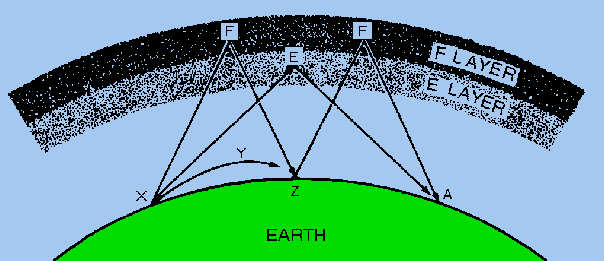
Remembering that snowy night and
the thrill of sending a signal to his dipole, where it was hurled up through
the stratosphere and along the paths of
space, depending upon the ionosphere to do its job, he smiled at her and gave
her the best overall answer he could summon.
“It’s magic,” he said.

Left to right: KnightKit T-50 transmitter, Lafayette HE-10 receiver (kit version was known as the KT-200,) with HeathKit QF-1 Q Multiplier on top. At a right angle sits the Globe Scout 65B cw and am phone transmitter. Also the famous (or infamous) Astatic D-104 microphone. Atop the Scout is an Allied Radio KnightKit Space Spanner ac/dc receiver, sporting original colors, battleship grey. Later versions featured a face panel of silver and dark grey.
David Griffin Copyright 2016
My complete list of stories is here:
http://www.windsweptpress.com/essays.htm
You are welcome to Friend me on Facebook at:
https://www.facebook.com/DaveBrotherJesse

The
Windswept Press
Murrells
Inlet, South Carolina
Tuesday, April 19, 2016
CONTINUED: Poor
When I entered the eight grade, my mother found a
job. Most mothers in our neighborhood
didn’t work in the 1950s. For the
generation before my parents, married women were practically not allowed to
work. In
the 1920's my spinster aunt was told by her employer at age 25 the company
wanted to provide jobs for married men so they could support their
families. She should get married, she
was told, or quit her job to make room for a man with dependents. Without an income she would have been destitute. She couldn’t depend upon her family because
in fact they really were poor. She was the only breadwinner at the time and
took care of the needs of her younger brothers and sisters. Her employer magnanimously offered her an
alternative to unemployment … less pay for the same work as an office
clerk. Less pay than the already diminished wages normally
paid to a woman of that era solely because of her sex.
Her boss explained that reducing her pay would make more money available
to pay a married man. She had no choice
but to take less. Her five brothers and
one sister went without what was already a meager lunch, nothing but an apple.
At age 16 my father found a job at the local
newspaper, eventually became a pressman and was paid trade wages, which were
considered an adequate living in that day. He had a steady income from it after
the union gained some footing at the newspaper in the 1930's. Before workers organized Dad was compensated
fair wages one week and less the next for the same work. It varied by as much as 50%. The company paid
their non-management employees based on how much profit the business made each
week. Workers had no idea if they were
told the truth about the newspaper's finances and anyway had no control over
profits, since the balance sheet was mostly influenced by advertising sales and
newsprint costs. The company's owners, whether stockholders or management,
smoothed out their own incomes and made up for their corporate mistakes by
short changing the employees.
My father had seen money troubles at a young age,
but through no fault of his own. In my case, a very short bout of being broke
was clearly my fault.
When I went
to live in New York City at age 20, I had little experience managing my
money. I was living away from home for
the first time, not watching my cash and spending too much on beer and items I
did not need. At one point I ran out of
funds and realized there was nothing left in my checking account. A paycheck was a couple of days away and I
remember that evening as I sat around watching a snowy picture on TV while
hunger gnawed at my insides. I’d had
nothing to eat since lunch.
The next day I asked a fellow worker if he would buy
me lunch at the cafeteria. Embarrassed, I
chose an older man in his forties because he was rather fatherly and always
free with advice to us young guys. I got
advice rather than a meal. He derisively
told me I should grow up and become responsible. My starvation continued until
the next morning and was probably the best lesson I ever received.
On that morning he came up to me and asked if I'd
found any money or food. Annoyed, I told
him to mind his own business and began to walk away. He grabbed me by the shoulder and turned me
around, the only time in my entire career when someone put a hand on me. He shoved a ten dollar bill in my hand and
said, "Don't be a shithead. Go
eat. I'll cover for you." I won't mention it, but I still remember his
name fifty years later. And that's the
only time in my life I remember being hungry.
There were times when a simple greed for a richer
life drove us to get educated, keep up an income to feed self and family, play
the game of life. It seems ... I don't know how true it is, but it SEEMS ... we
did a lot more for ourselves than some in the current generation of young
people. My young wife and I lived in a
house trailer while I attended college and she worked in a shopping center. The
trailer measured 10 by 32 feet and had no interior doors. When the west wind
whipped up across the hill today known as Fairmont, NY, the rear wall of the
trailer popped like the top of a tin can. Water seeped into the closet during
the winter and froze our shoes to the floor. I had two part- time jobs, one
with my former employer and the other nights and weekends at a drug store. I
learned to fix my car because I couldn't afford to take it to a garage. I
remember going to a dentist with a toothache two weeks after our son was born
while I was still a student and trying to pay him, but he fixed my tooth for
free. And when we had to move, our 15 pounds of hamburger got misplaced and
spoiled and we had to go without meat until I told the story to a fellow
employee as a joke on myself. He informed our manager and the boss insisted I borrow $20
from him to buy food for my family.
And absolutely none of that seemed like the end of
the world. Not when we were young. Except for the time the main drain in the
trailer stopped up and I had no idea how to fix it/ After trying various plumbing snakes, I
finally gave up. I had no money I would
need a small loan to hire Roto Rooter. When I called them to ask how much they
would charge, they told me they did not work on trailers because the T's in the
drains often ruined their equipment. I remember sitting there in the kitchen,
my pregnant wife at work that evening, feeling the full weight of facing a
problem I could not solve. Tears of frustration may have begun to wet my eyes
as I kept trying to think of a solution. The phone rang and it happened to be
my brother in law in Atlanta calling to say hello. He had a solution. A longer, thinner snake I didn't know about
existed, and he knew where I could rent one cheap.
We knew we'd get through it, that someday I'd have a
good job and we'd have two cars, a dog, two kids, a house and all that stuff.
We just needed to keep ourselves from going into debt.
That's what saved us. Never taking on any debt.
Driving a car with the fenders falling off, suffering the looks of people we
parked next to in parking lots, stretching our clothes till they were
threadbare and finding our furniture at garage sales. So that when the money
began to come in we could apply it to items we needed rather than use it to pay
off loans taken out on things we didn't need. That was called basic money sense
by our parents and those before them.
Things could have turned out differently for me. Life is a game of chance and I was lucky
enough to win some of its prizes. Yes,
of course, I worked hard, took advice, made what turned out to be smart choices
and struggled on when the going got rough.
But I've known others who did the same and wound up broke.
I never knew the awful feeling of realizing there was
not enough money to buy food for my children, or clothes or school
supplies. Or had to tell a landlord or a
bank that I could not make a rent or mortgage payment this month. Or be forced
to start selling household items or the furniture or keepsakes out the back door to get enough for
groceries. Or to stand on a corner waiting for a bus because my car was
re-possessed or my insurance cancelled.
But I've known men and women who suffered those consequences. I've tried to help them in my volunteer
work. It bothers me when the luckier
members of our society paint poverty with a broad brush and demean anyone who
is down on his or her luck. Some of the
downtrodden in America are there through no fault of their own. Many are probably complicit to some degree
... poor work habits, a worse attitude, no clue how to manage money, graduated
from a school that cared more for itself than the students, or caught in a
deceptive race baiting dance orchestrated by their politicians.
I would rather encourage someone than scold
them. There will always be those who
game the system and will sneer up their sleeve at your fine words of
encouragement. Let them. I suppose they
have some cause when they view what I have and what they don't. And I can't know all the circumstances that
sunk their boat and left them stranded on the shore. I really don't know why the worse-off are in
their predicaments. I only know I've
been very lucky.
When an old yellow school bus
pulls up in front of me filled with needy
people from south of the border, it’s
time to put away my opinions on national immigration policy, shaped for the
most part by the news media, and to simply help a brother and sister and child in
distress. We can quibble over federal
programs later.
Late one afternoon not long ago I drove through the
neighborhood where I grew up in the upstate New York city of Utica. The section of town is called Cornhill and I
keep the car doors locked when I visit and never come to a full stop at the
stop signs. The streets have decayed and the homes
are dilapidated. Many of the burned out shells were once the homes
of friends whose parents spent their money and weekends keeping the properties
looking nice. Today many are crack houses It’s not unusual to hear shots in the
distance, which is better than nearby.
The same sidewalks that once were filled with kids at that time of
day and fathers returning home from work were dark and empty.
I drove by street corners
on James Street, the main thoroughfare, where I had waited as a teenager for
the bus to take me downtown to meet friends for a movie and French fries and a
Coke. Today young men menace each other on
these same corners and fights are frequent. I think the buses no longer run to
this part of town. I passed the remains
of a school and playground where a kind hearted janitor repairing a window put
a Band-Aid on my elbow when I fell off my bike almost sixty five years ago.
Graffiti covers the walls of the building now and almost all of the windows
have been bashed in. Down the street the
church my family attended was closed up, having spent its declining days as a
neighborhood drop-in center where no one dropped in because they were too busy
dropping out.
An anger rose in me toward
the people who had turned a living neighborhood into a diseased and dying
quarter of the city where the inhabitants mostly depended upon the government
to survive.
I am from a
Cornhill working family, none of whom were educated. With grants, part time work, multiple jobs,
and while starting a family, I was able to progress through undergraduate and
graduate school. I am an accomplished professional and I am proud of myself, in
case you can't tell. My parents did not value education very much, but they had
strong beliefs and a strong ethic. Mostly, they loved each other and their
children very much.
After my
main career, I worked with crack addicts and some of the people in this world
who are "underprivileged."
As angry as
I get when I drive through Cornhill, I cannot fix the blame on any particular
group.. There are too many villains to
indict. From the businessmen whose
capitalism turned from enterprise to opportunism to pure greed at the expense
of the people, to the politicians who survive on the misery of those they swore
to help, to today’s Cornhill residents themselves, there is plenty of blame to go around.
You can
give the impoverished all the grants in the world, but you cannot give them the
caring that was often missing in their families. Nor can you give them the
positive experiences many of us benefited from. You cannot take away a child's crippling
sense of misplaced guilt because he could not find all of his mother's teeth as
he crawled around the floor looking for them, hoping they could be put back in
after her boyfriend’s fist blasted them fromher mouth.
You cannot
quiet the seething anger when a young out-of-work black man turns on the TV and
sees smiling, happy families on their way to Sears to buy a $1500 color TV. And
you cannot convince him, as he walks the streets of a Cornhill he didn't
create, that James Street could be a home, a cherished place to take care of
and to build upon.
Neither he
nor I was born to wealth. But I am lucky
beyond imagining to have come from a loving family and supportive
environment. In that more important sense
I was never poor.
David Griffin Copyright 2013
The
Windswept Press
Murrells
Inlet, South Carolina
www.windsweptpress.com.
Monday, April 18, 2016
CONTINUED: YL
The
Thundering Brass Busters Amateur Radio Club met down in the village, upstairs
over a bar. Through the evening members
huffed up and down the stairs for re-fueling.
To get a quorum for a vote, the secretary often had to run down and grab
a few Thunder Busters.
Expecting
only geriatric old men, Gloria hoped none would croak during her visit. She
didn’t plan to utilize her mouth-to-mouth training on anyone over twenty-five. Death was still a stranger to her, except for
times when she thought of killing the old man.
Like the day he saw a ham license plate on the car in front of
them. He tapped out CQ on his horn a few
times until the man ahead of them pulled over and walked back to their car and
swore at them. Dad said the rude fellow was
surely an AM phone man.
At
the meeting she met 4 or 5 young college men who had recently joined the
club. They were very taken with
her. She signed up immediately, after
hurriedly borrowing the dues from her father.
She made a firm resolution to learn HamSpeak when the boys stood nearby
and began to use the Q code while staring at her.
“Hey,
Robert,,” said the taller young fellow, “why don’t you QSY over to my QTH
tomorrow and we can QSO about this FB YL here.”
On
the way home she told her father there was no reason why the club couldn’t have
dances and maybe a formal dinner with decorations and a band at the end of the
year. It was possible many young wives might want to join, she
said, and all the old men with nothing to do could provide baby sitting for the
toddlers, but not downstairs near the beer coolers.
He
sighed. “QSL,” was all he said.
That
was a year ago. Now Gloria has her Extra
license, sends and receives at 40 words per minute. She has dated most of the Novices. She’s cancelled her dream to become a
Broadway understudy and next year will instead head off to Carnegie Mellon to
pursue a degree in Applied Physics and Engineering. During her summers off she’ll sleep late in
the morning and stay up half the night DXing for countries far and wide. She can spell each one of their names. Dad is still trying to get the DX-20 to work.

Left
to Right, Top to Bottom: Central Electronics 20A Multiphase Exciter (or
expensive QRP transmitter,) the tiny McMurdo Silver 701 Atom X Transmitter with an 807 final;
the famous Drake 2B receiver, the Heathkit
DX-20 50 watt transmitter. Beneath the
Drake 2b is an MFJ 941 antenna tuner.
Copyright David Griffin, Windswept Press, 2016
Stories and Essays page is at http://windsweptpress.com/essays.htm
You may friend me on Facebook at:
https://www.facebook.com/DaveBrotherJesse
I normally put a story up each week on Facebook.
https://www.facebook.com/DaveBrotherJesse
I normally put a story up each week on Facebook.

Subscribe to:
Posts (Atom)